
I watched a documentary about plastic… and now I’m rethinking everything
From your kitchen to your skincare - where exposure adds up, and what to swap first

Last week I watched The Plastic Detox on Netflix and honestly I haven’t stopped thinking about it since…
It follows six couples struggling with “unexplained” infertility.
At the start of the study, every single one of them had high levels of chemicals like Bisphenol A and phthalates in their bodies!!!
Nothing particularly unusual about their lifestyles. No extreme exposure.
Just… pretty normal life.
Normal kitchens. Normal products. Normal routines.
And that’s the part that resonated so much with me.
Because it’s very easy to assume this doesn’t apply to me. Until you realise, it absolutely does. And it is kind of terrifying…
So where do you even start with reducing plastic exposure?
Not by throwing everything out. Not by trying to be perfect.
Just by swapping a few things.
I've created this guide, not to overwhelm, but to help you know where to focus your attention and your money.
1. THE KITCHEN (pretty quick wins with big impact)
If plastic has taken over anywhere, it’s here.
We cook with it. Chop on it. Store food in it. Heat it. Eat off it.
Daily exposure really adds up in the kitchen. All the while it is leaching directly into the food we are eating.
Here are some of the most impactful swaps:
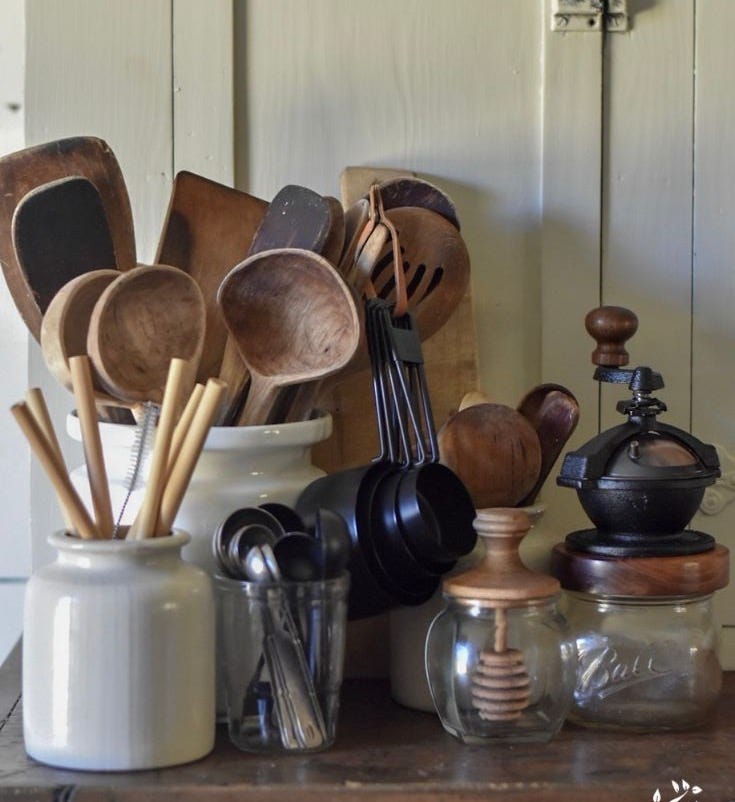
Plastic containers → glass or stainless steel
Non-stick pans → stainless steel or cast iron
Plastic chopping boards → wooden chopping boards
Plastic utensils → wood or metal
Cling film → beeswax wraps or just… a lid
You don’t need to spend a fortune, places like IKEA and TKMaxx are great for some really affordable yet good quality swaps.
However, if you do feel like splashing out on something a little fancy, then Le Creuset do some gorgeous ceramic or stainless steel pans.
2. CLEANING
This one is pretty low effort, high reward.
There are SO many nasty chemicals in modern day cleaning products, and honestly swapping these out is one of the quickest ways to dramatically reduce your exposure.
When you think about it like this…
You clean your plates with that pink-coloured, chemical-laden, rose-smelling dish soap…
Then eating directly off those plates???? nasty!!
There isn’t a lot that just a few simple cupboard staples can’t replace. Even better, these are all super cheap, especially when bought in bulk. They probably work out a lot cheaper than their modern day replacements.
White vinegar - Honestly, the holy grail. I use it for everything: surface spray, glass cleaner, bathroom cleaner, descaler - even as a fabric softener.
Tip: buy in bulk and add lemon rinds to the bottle for a fresher scent 🍋🧼(just don’t let them get into your spray bottles).
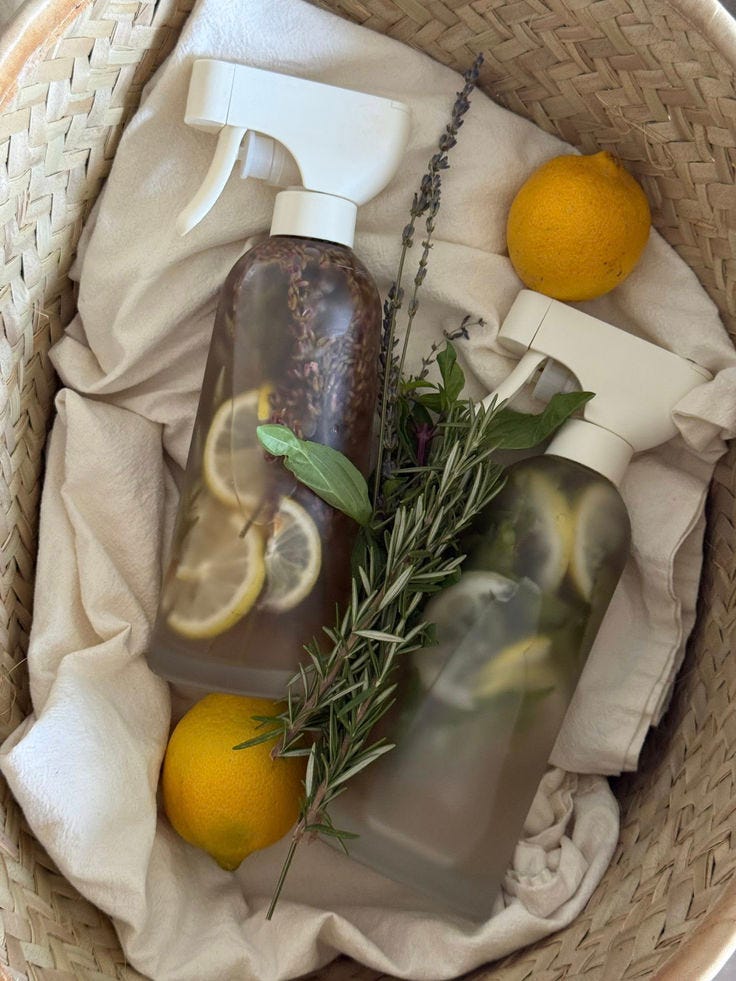
Bicarbonate of soda - another absolute staple. I tend to mix it with a bit of water and make a paste, then spray with vinegar to get a good clean. Also great for blocked drains, clothing stains and as an oven cleaner.
Citric acid - a hero for when there’s tougher dirt or grime, mix with the bicarb and vinegar and it will start to fizz and you can literally see it removing the dirt. It also makes me feel like a scientist so that’s fun too 🤷♀️
Castille soap - a great option for making your own laundry detergent or dish soap.
Some brands that are great too:
Kit and Kin - for all round cleaning
Purdy and Figg - for surface cleaner
Allavare - for washing powder
DIP - for washing
3. BEAUTY
It’s easy to forget that our skin is our largest organ in the body. So everything we apply to externally, is getting absorbed internally
When you layer:
skincare 🧴
makeup 💄
body products 🛁
hair products 💆🏼♀️
fragrance 🌹
…the list of chemicals really starts to compound.
The average woman is exposed to over 150 chemicals daily, and she’ll actually EAT over 20 grams of lipstick per year!!!! 💄Gross…
And while each product might be ‘safe’ on its own, the combination with other products is rarely considered, and ‘a little’ actually turns into quite a lot.
The good news is there are more clean or low-toxic brands than ever.
A few of my favourites:
Deodorants:
Sanitary products: (these should absolutely be organic cotton)
4. CLOTHING
Most clothing today is plastic. 👚
Polyester, acrylic, polyamide = synthetic fibres = plastic.
Those buttery soft Lululemon align yoga pants? Yup, just plastic.
Which is directly sitting on our skin all day long, and every time it gets washed or worn teeny tiny microplastics break off and enter our water system.
Now this is definitely a hard pill to swallow, and for me it is without a doubt the hardest thing to change. However, there’s no need to be overwhelmed and throw your entire wardrobe out. It also doesn’t mean that you can only dress like this from now on…

For me, the first place to start is underwear. These absolutely need to be cotton, ideally organic cotton.
Organic basics do some nice options, but you can find cotton undies in lots of places.
After that, it’s a case by case basis. Now, whenever I’m buying something new I check the labels before I even try it on and get attached. If it’s synthetic, then it’s straight back on the rail. No matter how cool it was, as soon as I know it’s plastic it’s now instantly not cool.
It 100% makes me more mindful and intentional when shopping (and saves soooo much money on impulse purchases).
Look for natural fibres like cotton, wool, silk, cashmere, linen, bamboo, or hemp.
I usually have good success in Uniqlo, COS, and Organic Basics - but you can find natural fabrics almost anywhere if you look closely, it just takes a bit more attention and patience.
5. HOME
Maybe something less thought of and definitely not something you need to change right away, but soft furnishings within our home are also a big place of exposure.
Your sofa.
Your mattress.
Your bedding.
Often synthetic. ❌ Often chemically treated.❌
These intense chemicals will ‘off gas’ and release toxins directly into your home over time.
Where possible, opt for natural materials like wood, linen, cotton, and feather fillings. Vintage furniture can also be a great option, as off-gassing is usually reduced and quality is usually better.
If you do buy new, try to do so in Spring/Summer and have the doors + windows open as much as possible when you first bring it in your home to let air circulate.
For bed linen opt for linen or cotton, this is going to help regulate your temperature and improve sleep too! I like Dusk and Rise and Fall.
A natural mattress is a bit more of an investment, I’m not there yet but I’ve got my eyes on Natural Mat.
6. FOOD & WATER
You don’t need to be extreme here.
If you’re already eating mostly whole foods, then you’re mostly there with this one.
But some key things to avoid as much as possible:
Ultra-processed and packaged foods 🍩
Microwavable plastic packaging 🥡
Tins/cans (often lined with plastic—opt for glass where possible) 🥫
I like to work on a good, better, best process.
Good: eating mostly fresh whole foods
Better: maybe its organic produce or even from a Farmers Market or a veg box delivery
Best: growing your own organic produce
It will look different for everyone.
If budget is a factor, the EWG’s “Dirty Dozen” and “Clean Fifteen” lists can help prioritise where organic matters most.
Washing vegetables with bicarbonate of soda is another helpful step (one I’m still working on this too).
Finally, water. 💧
Tap water is filled with chemicals, toxins and plastics that have leached their way in.
Investing in a water filter is SO important. There are a range of options you can go for, whether that’s a countertop jug or a complete reverse osmosis filtration system plumed in. Either way, it is important to have some form of filtration going on. Yes it feels like an investment, but when you calculate the cost per use, it’s the best value for money you’ll spend.
Some final thoughts
The purpose of this guide is not to overwhelm you, but rather…
To raise awareness.
To empower you to take back control of what enters your body and your bloodstream.
To take control of your own health.
It doesn’t mean you have to throw your entire life away overnight.
It’s just about becoming more mindful with your purchases, even just making a few swaps will make a difference.
Because for the couples in the documentary - without too many spoilers - some seriously incredible differences were made…
I hope this helps!